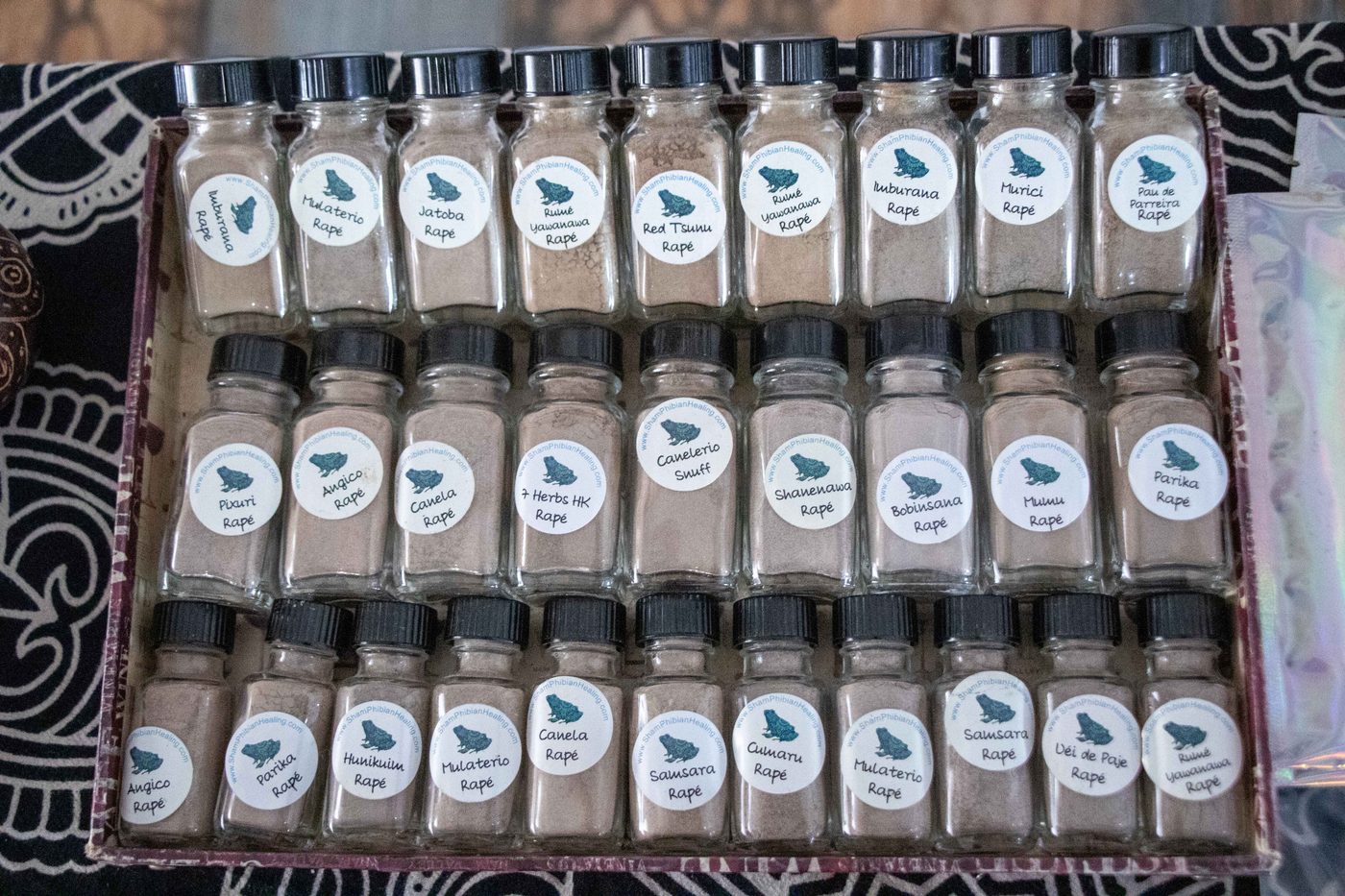
Rapé (pronounced ha-PEH) is a traditional Amazonian nasal snuff deeply rooted in indigenous culture and spirituality. Prepared from a blend of medicinal plants, often centered around Nicotiana rustica (mapacho), it is administered nasally through a V-shaped pipe known as a kuripé or a long pipe known as a tepi.
Botanical Composition
- Core ingredient: Nicotiana rustica (mapacho)
- Additional medicinal herbs and tree barks, varying by tribe and blend
- Ash from specific sacred trees, added for potency and spiritual significance
Cultural Significance
- Central to Amazonian indigenous life, used in rituals, ceremonies, and daily practice
- Fosters community, healing, and spiritual connection
- Deeply rooted in ancestral knowledge, with respect for nature and ecological balance
Preparation
Preparation is meticulous and often sacred: plant selection, harvesting, drying, grinding, and mixing, with specific rituals and techniques that vary between tribes such as the Yawanawa, Katukina, Huni Kuin, and Shipibo-Conibo.
Effects
- Physical: warmth, energy, increased salivation, sometimes sneezing or watering eyes
- Mental: enhanced focus, clarity, and concentration
- Spiritual: connection to self, nature, and the universe; emotional release and catharsis
- Possible: nausea, lightheadedness, or purging
Safety Guidelines
- Start with small doses and choose a trusted source
- Create a safe, supportive environment; consider a sitter for first experiences
- Be aware of allergies, nasal irritation, and the intensity of strong blends
- Consult a healthcare professional if you have medical conditions or take medication
Rapé and Other Modalities
Hapé can be combined with yoga, meditation, breathwork, sound therapy, and plant medicine ceremony, deepening the benefits of each practice.
Hapé should be approached with respect, caution, and a deep understanding of its cultural context. Individual experiences may vary. Contains tobacco; for adults 21 and over.